Guide to Polewear Fabrics: Which Materials Are Used in Pole Dance Clothing
In pole dance, design matters — but it is the fabric that truly makes the difference.
During intense training sessions, the material becomes a second skin: it must move with the body, dry quickly, and provide comfort without distractions. That’s why, in professional pole dance wear, fabric selection is just as important as design.
In this article, we explore the most commonly used materials in modern polewear — the same ones we use in the collections of Alënka.moda to ensure freedom of movement and lasting comfort, even during the most demanding sessions.

Shiny Premium Lycra (Elastane/Spandex, Shiny Lycra, Biflex in some markets)
Premium Lycra is one of the most widespread materials in modern pole dance clothing. It is an ultra-fine, stretchy fabric with a delicate shiny finish, designed to enhance the silhouette and create a striking look.
Its main feature is high elasticity combined with lightness. The fabric stretches in all directions, perfectly following the body’s lines without restricting movement, even in complex elements.
In contact with the skin, Lycra feels smooth and cool, which is why many dancers prefer it for intense training sessions.
Advantages of Premium Lycra
⌓ High elasticity
⌓ Ultra-light structure
⌓ Delicate shiny finish
⌓ Silky, cool-to-the-touch surface
⌓ Comfort even during intense workouts
Fun Fact
Why is it called “Lycra”? Lycra® is a brand, but today it refers to any high-performance stretch fabric. Its elasticity comes from elastane (spandex), which usually makes up 10–30% of the fabric. In polewear, Lycra primarily means comfort and freedom of movement, not a single type of fiber.
This fabric dries quickly and is ideal for warm climates. For this reason, shiny Lycra is widely used in training sets where lightness and freedom of movement are essential.
Quality Lycra is also durable: it retains color after multiple washes and maintains a polished appearance over time.

Matte Lycra (Matte Lycra, Stretch Matte Fabric, Matte Biflex)
Matte Lycra is a classic in sports and dancewear. Unlike shiny versions, it has a soft, subtle surface with a minimalist aesthetic.
It is especially appreciated by those who prefer functionality and a clean style. The matte finish makes the fabric versatile and easy to pair with other training pieces.
Advantages of Matte Lycra
⌓ High durability
⌓ Excellent elasticity
⌓ Stable after frequent washes
⌓ Comfortable during long workouts
⌓ Universal aesthetic
Matte Lycra is often used for basic polewear sets and is ideal for regular studio training.

Stretch Mesh (Sometimes Called Tulle)
Stretch mesh is a lightweight, elastic fabric commonly used in contemporary dancewear.
Its almost imperceptible structure creates a sense of lightness and visual depth without weighing down the garment. Thanks to its high breathability, it is particularly comfortable during intense training.
Advantages of Stretch Mesh
⌓ Extreme lightness
⌓ Good elasticity
⌓ High breathability
⌓ Dynamic visual effect
Where Stretch Mesh Is Used
⌓ Tops and bodysuits
⌓ Polewear design pieces
⌓ Stage outfits
⌓ Decorative inserts
⌓ Linings for certain garments

Dance Jersey (Stretch Jersey, Elastic Jersey)
Dance jersey is a soft, stretchy fabric widely used in choreographic clothing.
Its main quality is comfort combined with the ability to follow body movement. The material gently adapts to the figure and remains pleasant on the skin even during long training sessions.
Jersey shows its full potential in motion: the fabric “dances” with the body, highlighting the fluidity and expressiveness of gestures.
Garments Made from Jersey
⌓ Shorts
⌓ Palazzo pants
⌓ Skirt-pants
⌓ Crop tops
⌓ Flowing dance elements
It is particularly appreciated in exotic pole dance, flow, and contemporary styles.
Advantages of Jersey
⌓ Extremely soft
⌓ Highly elastic
⌓ Prolonged comfort
⌓ Fluid behavior in motion
⌓ Non-static (doesn’t cling due to static)

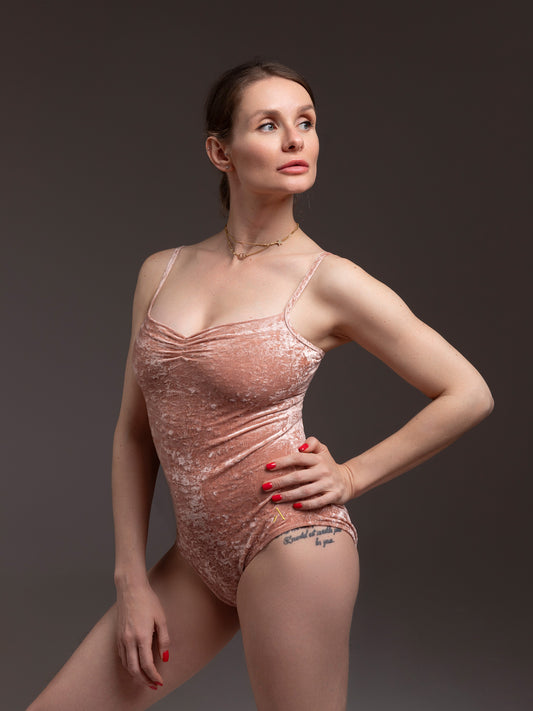
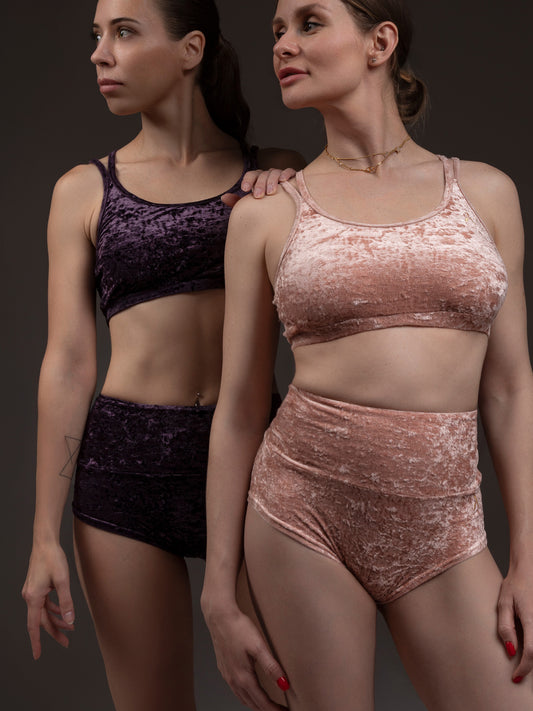
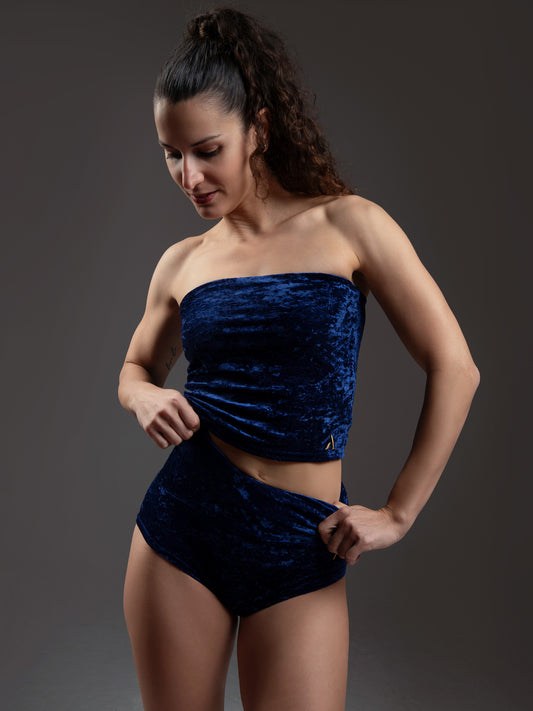
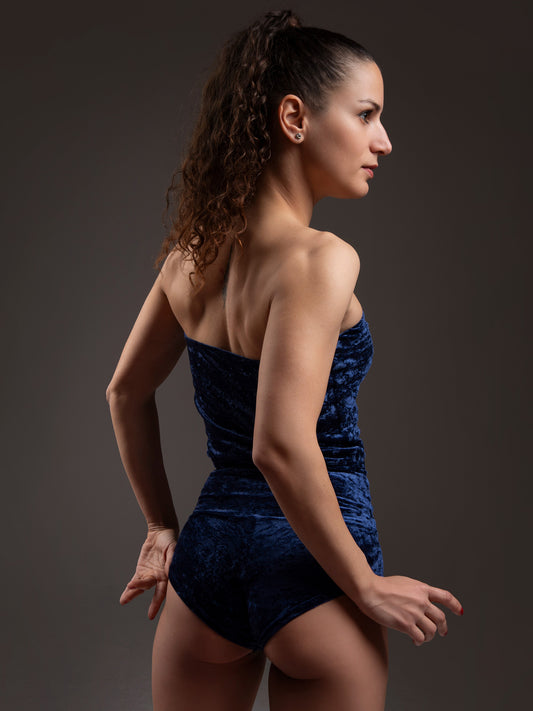
Stretch Velvet (Stretch Velvet, Velour Stretch)
Stretch velvet is one of the most dramatic materials in polewear. Its velvety texture creates a rich, theatrical visual effect.
Modern sports velvet is elastic enough to allow freedom of movement and is often chosen for performances, photo shoots, and stage looks.
Advantages of Stretch Velvet
⌓ Velvety texture
⌓ Softness
⌓ Good elasticity
⌓ Strong visual impact
Seasonality should be considered: velvet is a warm fabric and may be less comfortable in very hot environments.

Why Natural Fabrics Are Rare in Polewear
Many beginners wonder why cotton or other natural fabrics are rarely used in pole dance clothing.
Natural materials tend to perform less well during intense workouts:
→ They absorb moisture
→ Dry slowly
→ Lose shape more easily
→ Limit elasticity
For this reason, modern brands use synthetic fabrics with elastane (spandex), which allow the material to stretch and return to its original shape, maintaining stability under stress.

Cotton with elastane: when it is used in dancewear
Although high-performance synthetic fabrics are preferred in professional polewear, there are situations in which cotton-based materials are also used.
In modern dance styles such as hip hop, contemporary or floorwork, as well as during warm-up, yoga and stretching sessions, fabrics made of cotton with elastane are often chosen. The presence of elastane is essential: it improves elasticity and allows the garment to adapt to movement while maintaining its shape.
Where cotton with elastane is used
→ warm-up pants
→ tops and long-sleeve shirts
→ garments for yoga, stretching and floor-based training
→ layers worn over polewear before or after training
It is important to note that these materials do not replace the technical fabrics used in pole dance, but rather complement them, offering comfortable solutions for specific phases of training or for other dance styles.
Why Fabric Is So Important in Pole Dance
During training, clothing constantly interacts with the body: it stretches, moves, and comes into contact with sweat. The wrong fabric can overheat the skin, restrict movement, distract, or lose shape after washing.
A good fabric, on the other hand, almost disappears on the body and allows full focus on movement.

How to Choose the Right Fabric for Polewear
Choosing fabric depends not only on aesthetics but also on how it feels in motion and behaves over time.
Many dancers immediately notice the difference on the skin:
→ Lycra — cool and smooth, like a second skin
→ Jersey — soft and enveloping
→ Mesh — almost imperceptible and highly breathable
During long workouts, practical differences also emerge:
→ Lycra maintains shape and color
→ Mesh requires delicate washing
→ Velvet can slightly change texture in high temperatures
Over time, every dancer develops a personal preference. Some choose minimalist matte Lycra, others prefer shiny materials, while for more dance-oriented styles, many opt for soft jersey.
Alënka.moda collections use various professional pole dance fabrics — from lightweight premium Lycra to stretch velvet — to offer pieces that feel natural on the body, are comfortable for training, and match individual dance styles.
→ Explore the polewear collection in the Alënka.moda catalog.

How to Recognize High-Quality Sports Fabric
A good sports fabric:
→ Recovers its shape quickly
→ Has a uniform texture
→ Doesn’t become see-through when stretched
→ Retains color after frequent washes
Fun Fact
Most professional dance fabrics contain 15–30% elastane. This fiber allows the fabric to stretch and return to its original shape.
Caring for Polewear Fabrics
Even the highest-quality fabrics require proper care. How you wash and dry your training clothes directly affects garment longevity, elasticity retention, and the fabric’s appearance over time.
That’s why we’ve dedicated a separate article to polewear care:
Polewear and Dancewear Care: Care of polewear and dancewear: how to preserve the shape, elasticity and premium look of the fabric
This guide provides practical advice on washing, drying, and storing polewear to keep your pieces in perfect condition for as long as possible.

➺ Frequently Asked Questions
✷ What is the best fabric for pole dance?
| There is no single “best” fabric for pole dance. Most polewear is made from synthetic fabrics with elastane, such as lycra or stretch jersey, as they provide elasticity, stability and comfort during movement. |
✷ Why are synthetic fabrics mainly used in polewear?
| High-performance synthetic fabrics dry quickly, retain their shape over time and offer excellent stretch. This makes them more suitable for intense training than natural materials. |
✷ Is cotton suitable for pole dance?
| Pure cotton is not ideal for pole dance, as it absorbs moisture and dries slowly. However, cotton with elastane can be used for warm-up, yoga or as a layer worn over polewear, but not for training on the pole. |
✷ Which fabric is best for intense training?
| For intense training sessions, premium lycra and technical stretch fabrics are preferred due to their lightness, breathability and ability to move with the body without restriction. |
✷ What is the difference between shiny and matte lycra?
| The main difference is aesthetic. Shiny lycra enhances the silhouette with a glossy effect, while matte lycra offers a more minimal and understated look. Both provide similar levels of elasticity and comfort. |