Care of Polewear and Dancewear: How to Preserve the Shape, Elasticity and Premium Look of the Fabric
Polewear and dancewear are not just sportswear. They are used in demanding conditions: they stretch constantly, follow the movements of the body, adhere to the skin and support movement day after day, wash after wash.
Caring for garments is part of a more conscious relationship with clothing. From a slow fashion perspective, taking care of garments means valuing the work of design, the quality of materials and a more attentive connection with what we wear.
When a garment is designed to last over time, follow the body and maintain the quality of the fabric, the way it is treated becomes fundamental. Careful maintenance is not only a technical matter, but also a gesture of respect toward the material, the design and the body itself.
→ Incorrect care can damage even the highest-quality garment after only a few washes.
In this article you will discover:
◊ how to properly wash and dry dancewear
◊ what should absolutely be avoided
◊ how to care for different materials
◊ and how to recognize when a garment has reached the end of its life

Why polewear and dancewear require special care
Unlike everyday clothing, dance garments:
◊ contain a high percentage of elastane
◊ stretch and continuously return to their original shape
◊ are designed to fit the body perfectly
◊ are washed frequently due to direct contact with the skin and repeated training sessions
Incorrect care can cause:
→ loss of elasticity
→ deformation of internal elastic microfibres
→ a less precise fit and a silhouette that loses definition
→ fabric that no longer appears smooth and uniform
✦ Proper maintenance helps preserve that “second-skin” feeling the design was created for, together with the visual quality of the fabric.
 How to properly wash polewear and dancewear
Hand wash or machine wash? 🧼
✦ Hand washing is always the best option, especially for more delicate pieces.
✦ Machine washing is possible if:
◊ a delicate program is used
◊ the temperature does not exceed 30°C
◊ the spin cycle is minimal or absent
✦ Turn garments inside out before washing:
◊ helps preserve the surface of the fabric
◊ reduces friction during washing
✘ Intensive washing programs accelerate the wear of elastic fibres.
Water temperature 💧
✦ Cold or lukewarm water (up to 30°C). High temperatures can weaken elastic microfibres and compromise the material’s ability to maintain its shape
✘ Hot water damages elastane and affects the garment’s shape
What to wash garments with 🥼🩴
✦ Separately
✦ With other soft and elastic garments
✘ Towels
✘ Jeans
✘ Garments with zippers, velcro or rigid accessories
→ Rough fabrics and metal parts can damage the surface of the garment.
Recommended detergents 🦋
✦ Liquid detergents for delicate garments
✦ Specific detergents for sportswear
✘ Powder detergents
✘ Bleach
✘ Fabric softeners
→ Important: fabric softener creates a film on the fibres that over time makes the material less elastic and less defined in shape, especially in velvet fabrics.

How to properly dry polewear and dancewear
Drying is one of the most critical steps.
Avoid:
∅ tumble dryers
∅ radiators
∅ wringing or twisting the fabric
Recommended:
→ gently remove excess water with your hands
→ lay the garment on a towel
→ air dry away from heat sources and direct sunlight
Flat drying is ideal to maintain the original shape of the garment. Proper drying allows the fibres to relax naturally and maintain a smooth and harmonious surface.

Care according to material
Lycra / biflex / microfiber 🪶
Highly elastic, body-fitting fabrics that retain their shape when properly cared for
→ wash in cold water
→ minimal spin cycle
∅ prolonged soaking
∅ fabric softener
Mesh 🕸
Very delicate fabric
→ hand wash
→ minimal friction
∅ spin cycle
∅ washing with other garments
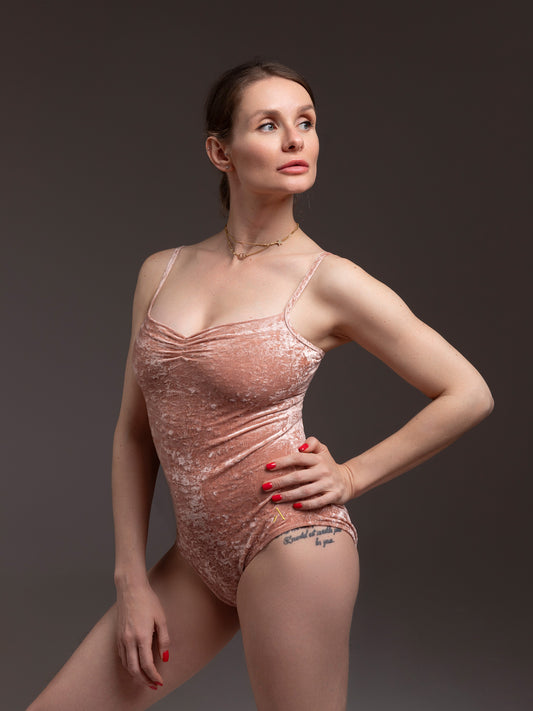
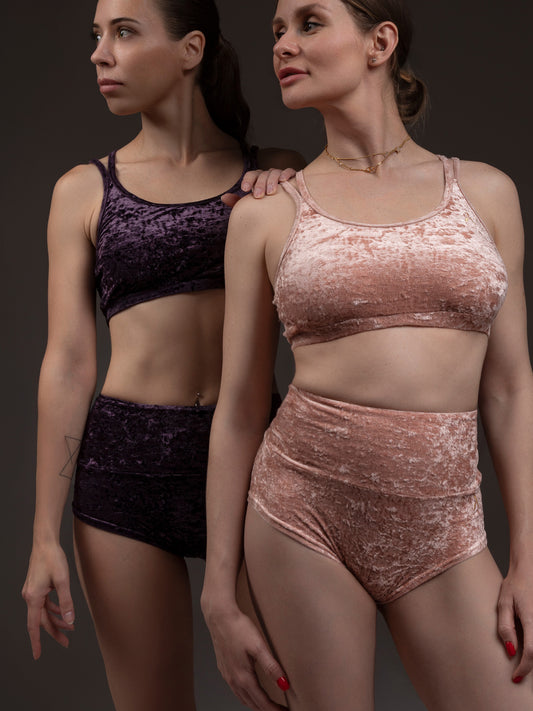
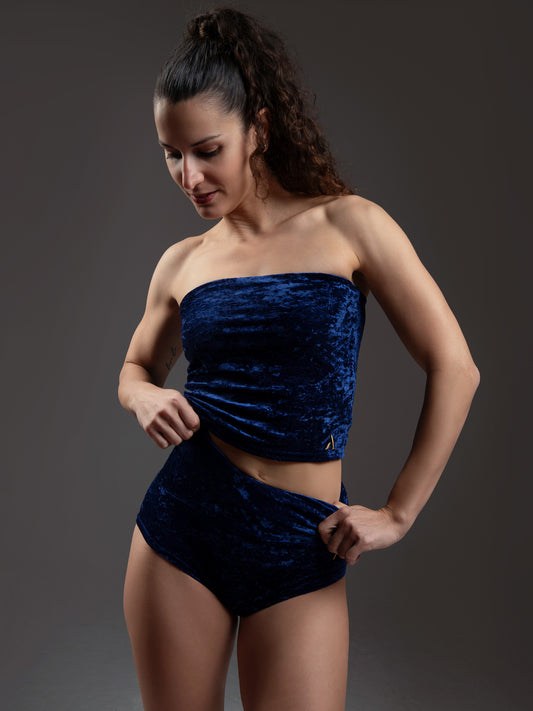
Velvet 🪸
Sensitive to pressure and heat
→ hand wash only
→ dry flat
∅ spin cycle
∅ ironing
Jersey 🪽
Soft, fluid and comfortable on the skin
→ delicate washing
→ dry on a towel
∅ pulling the fabric while wet
Tops and lightweight semi-transparent garments 🪡
Breathable fabric, extremely pleasant on the skin, light and natural in appearance
→ hand wash or delicate cycle
→ cold water
→ dry flat
∅ wringing
∅ high temperatures